Rigorous, human-centered evaluation for nonprofits, schools, and funders: evidence you can act on, in language your stakeholders understand.

Program evaluation is a systematic way of learning how a program is doing, and turning that learning into decisions. A process evaluation looks at how the program actually runs day to day: what participants experience, how closely delivery matches the design, and where things break down. An outcome evaluation looks at what changed for the people the program serves. Done well, evaluation starts from the evidence your program already produces, gathers what is missing, and puts the findings in language funders, boards, and staff can use.
Tap a card to see an example
Is the program running the way it was designed to, and is it moving the outcomes it exists to move? Both questions, answered with evidence.
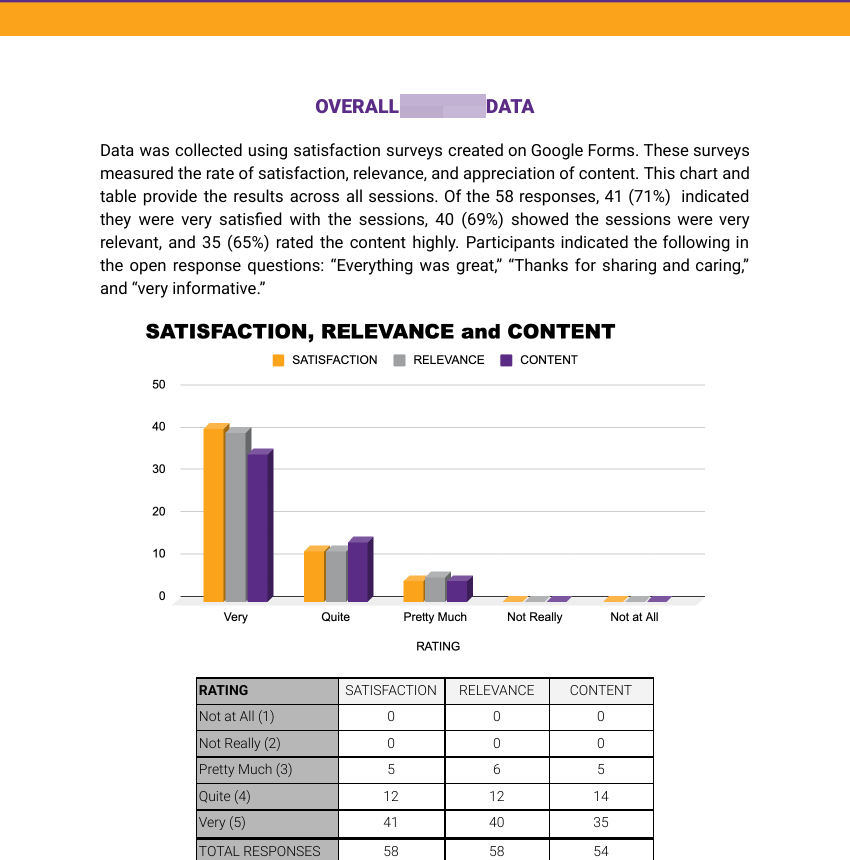
Surveys, interviews, and participatory methods that put the people in the program at the center of the evidence.
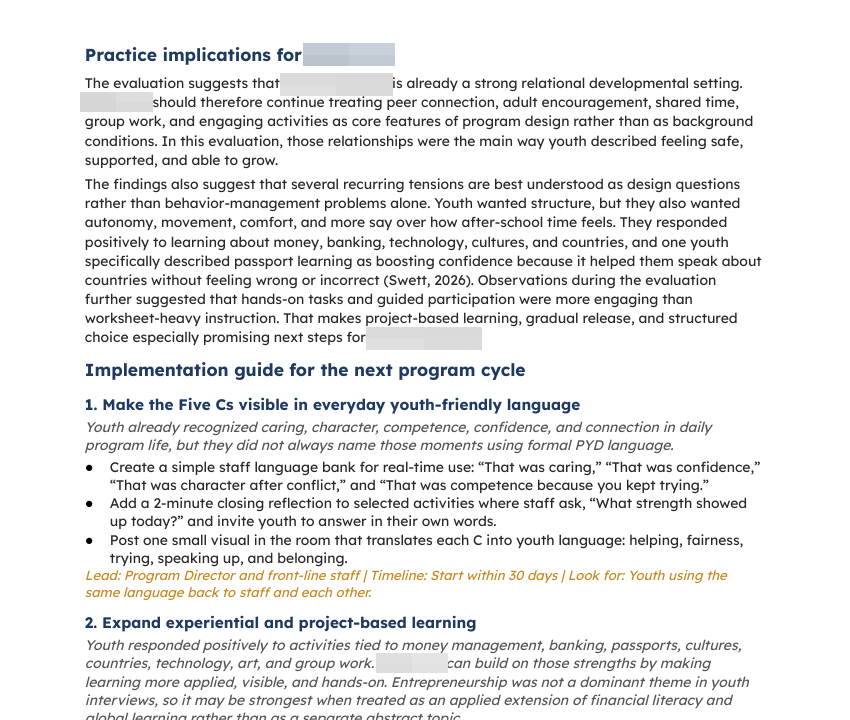
Findings that become specific, usable next steps for the next program cycle, not a report that sits on a shelf.
Tap a card to see what it looks like
A report written for the people who fund you: clear structure, plain language, evidence where it matters.
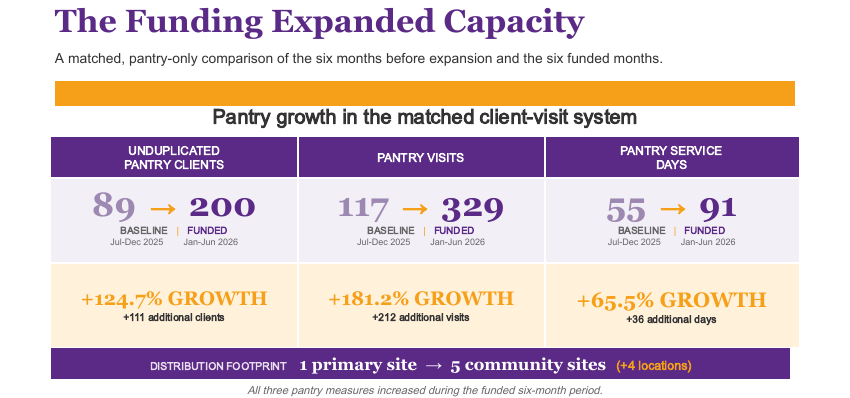
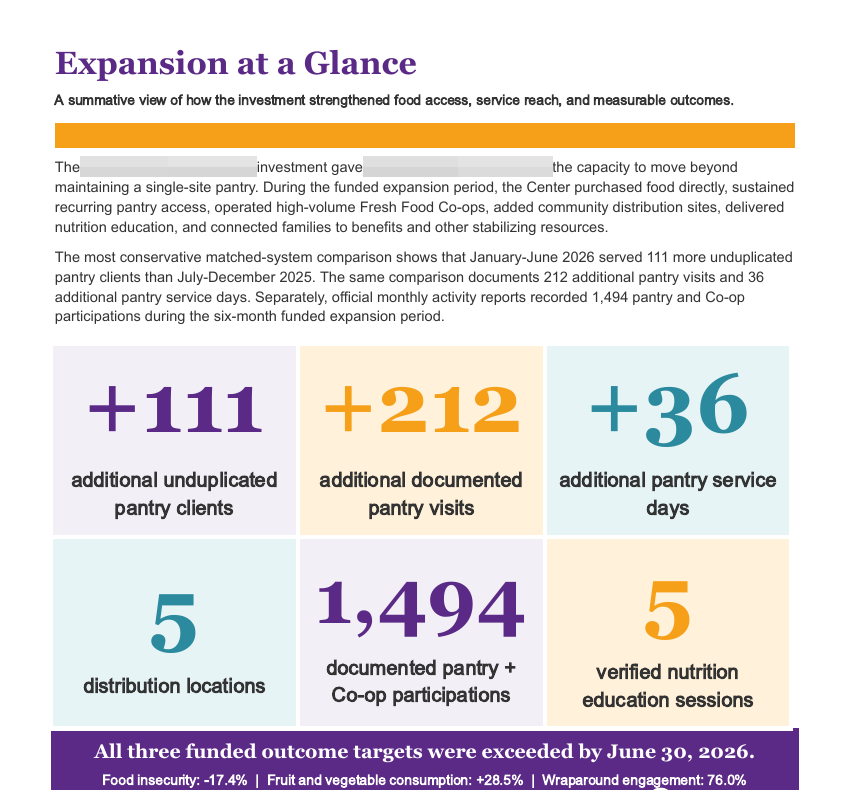
No 40-page data dump. Findings organized around your evaluation questions, with the numbers that answer them.
Each finding stated plainly with its evidence: what changed, by how much, and over what period, so a board or funder can follow it without a statistics background.
Recommendations written as actions, with owners and timelines, not vague themes.
An implementation-guide format: each recommendation with a suggested lead, a timeline, and what to watch for, so staff know exactly what to do on Monday.
Every project starts from your questions, not a template, and metric data alone never gives the full picture. Numbers tell you what moved; participant experience tells you how and why. So we pair quantitative methods (surveys and the data your program already collects) with anthropological strategies like photovoice, free-listing, interviews, and focus groups that bring participants’ own words and images into the evidence itself.
Your questions first.
We start with what you, your board, and your funders actually need to know.
A plan that fits.
Methods, measures, and a timeline shaped to your program, your participants, and your budget.
Evidence gathering.
Quantitative surveys and program data alongside photovoice, free-listing, interviews, and focus groups: participant experience in participants’ own words and images.
Findings you can act on.
Process and summative reports and impact reporting your funders and board can use, plus a working session with your team on what to do next.
Evaluation here is informed by Dr. Swett’s own research on programs and the people who run them.
Dr. Swett’s research at Oregon State University was a process evaluation of a positive youth development after-school program in Liberty City, Miami, and it was student-centered by design. Inside the program, students produced the evidence themselves: they took and discussed their own photographs (photovoice), listed what mattered to them (free-listing), reflected on the Five Cs of positive youth development, and shared their experience through interviews and reflection activities. Eighteen of the 22 enrolled students took part in at least one component.
The methods paid off. Instead of repeating program language, students described the program in their own words, and connection emerged as the strongest theme in what they valued. Their critiques of everyday conditions became concrete recommendations for program refinement and future evaluation. That is what a student-centered process evaluation gives an organization: the people living the program show you what to improve.
His PhD dissertation (Tiffin University) is a phenomenological study built on in-depth interviews with ten nonprofit leaders: conversations running 39 to 135 minutes. The findings: leaders’ formative experiences (early responsibility, instability, and ethical commitments) shape a leadership identity that becomes a practical resource, sustaining their teams and buffering burnout through daily practice. The study’s signature theme: responsibility before recognition.
For clients, that research lens shows up in the work: evaluations that ask how staff and participants actually experience the program, mediation that understands what conflict costs a team, and workshops grounded in how leaders really sustain themselves, not slogans.

Theodore Swett, PhD, an active evaluation researcher with two decades in education and nonprofit programs, from the classroom to the boardroom. He designs evaluations around the questions you actually need answered.
Program evaluations typically range from $4,000 to $8,000 per program or grant, per program year. Multi-program and multi-site engagements are quoted separately.
Swett Consulting Solutions: program evaluation, mediation, and organizational development
Running or starting a nonprofit or small business? For development, establishment, and consulting support, visit ANSANBL at ansanbl.com.